跳到正文

信任

为临床信任而建。

安全、隐私与质量从设计之初就已融入——我们让您的数据留在该在的地方。

部分内容以英文显示。

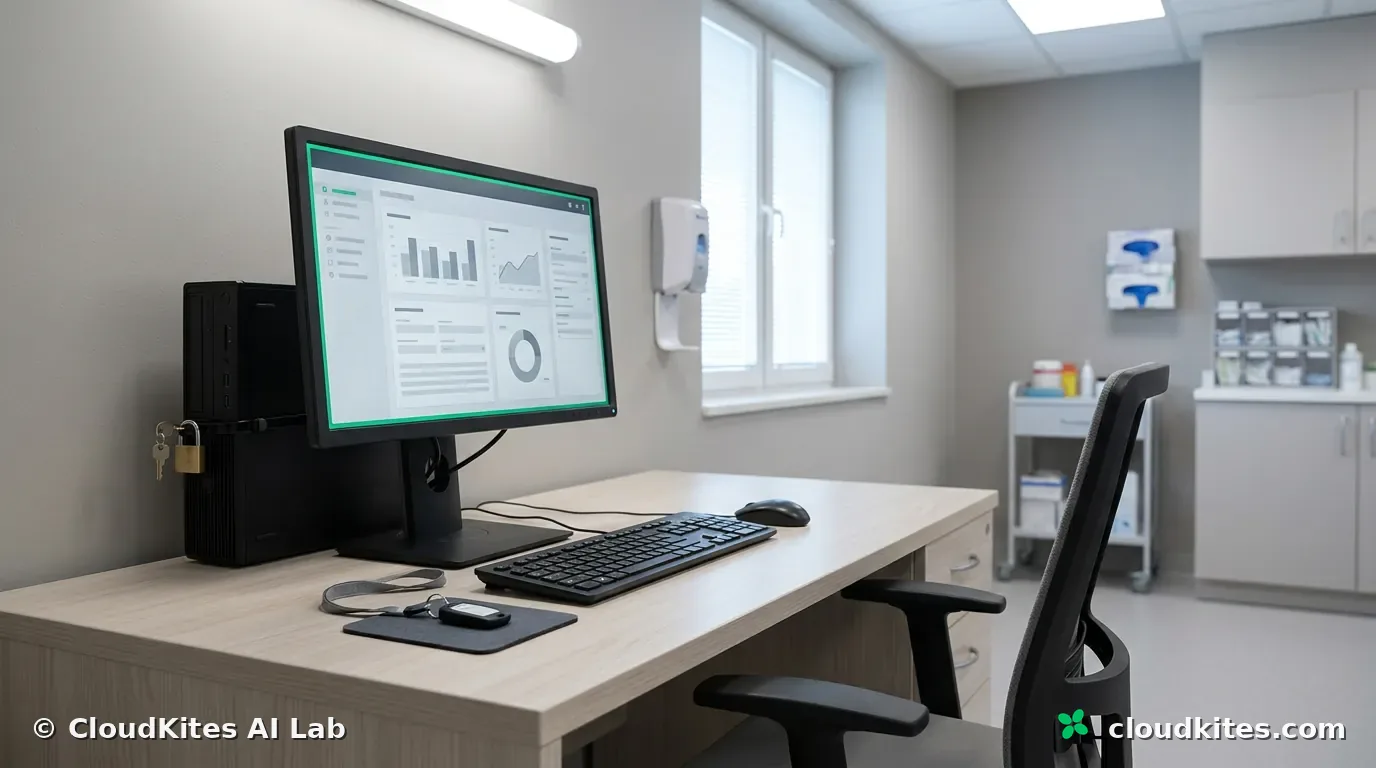
A secure clinical workstation where analysis and data stay on-site.

数据驻留地由您选择

临床平台十分灵活:可完全本地部署或采用混合方式——以契合您的机构——并提供欧盟数据驻留。默认情况下,分析与存储都在诊疗现场进行,仅同步去标识化或明确同意的数据,且始终由您掌控。免费工具 MedPodGP 与 Emu 更进一步:它们完全本地运行,没有任何数据离开设备。

建立在医疗标准之上

我们的产品旨在契合医疗所依赖的标准——用于影像与临床数据的 DICOM 和 HL7,用于健康信息处理的 HIPAA——并按照公认的临床软件质量、风险管理与安全实践构建。我们按照临床与安全标准进行设计,并如实描述我们的状况,而非暗示超出事实的内容。

我们如何处理安全

我们欢迎负责任的漏洞披露。安全问题可发送至 security@cloudkites.com。

Security you can reason about, not just believe in.

Most security pages ask you to take a great deal on faith. We would rather explain how things actually work, in language a clinician — not a security engineer — can follow and check. The starting point is simple: the less your sensitive data has to travel, the fewer ways it can go wrong. So we designed the whole system around keeping that data close to where it is created and used, and around making sure that whatever does move is something you have explicitly agreed to move.

By default, analysis happens inside your facility. There is no quiet relay to a remote service, no background upload of images, no copy of a record sitting on someone else's machine because that was the convenient way to build it. If a feature genuinely benefits from sharing something — and some do — that sharing is opt-in, it is limited to de-identified or consented information, and it is visible to you rather than buried in a setting nobody reads. The principle is that you should never be surprised by where your data has been.

Trust also depends on being able to look back. Our outputs are deterministic and reproducible: the same input produces the same result, and every step is logged so it can be retraced later. That matters in a setting where someone may, months on, need to explain exactly why a particular result appeared and what informed a decision. A tool that cannot account for itself has no place in clinical work, however clever it is. We would rather be predictable and explainable than impressive and opaque.

Trust you can verify

Four assurances hold across everything we build.

Secure by design
Security is engineered in from the start, not bolted on later.
Data stays on-site
Analysis and storage happen where care happens, by default.
Auditable
Outputs are reproducible and logged, so they can be traced.
Your data, your control
Only de-identified or consented data is ever synced.

Your data lives where you choose.

The clinical platform is flexible: run it fully on-premise or in a hybrid arrangement, and choose EU data residency if you need it. By default, sensitive imaging and patient data never leave the building — analysis runs on-site, and you remain in control of anything that is ever shared. The free tools, MedPodGP and Emu, are completely local, so nothing leaves the device at all.

  • On-premise or hybrid — whichever fits your facility.
  • EU data residency available; only consented data is ever synced.
  • MedPodGP and Emu are completely local — nothing leaves the device.
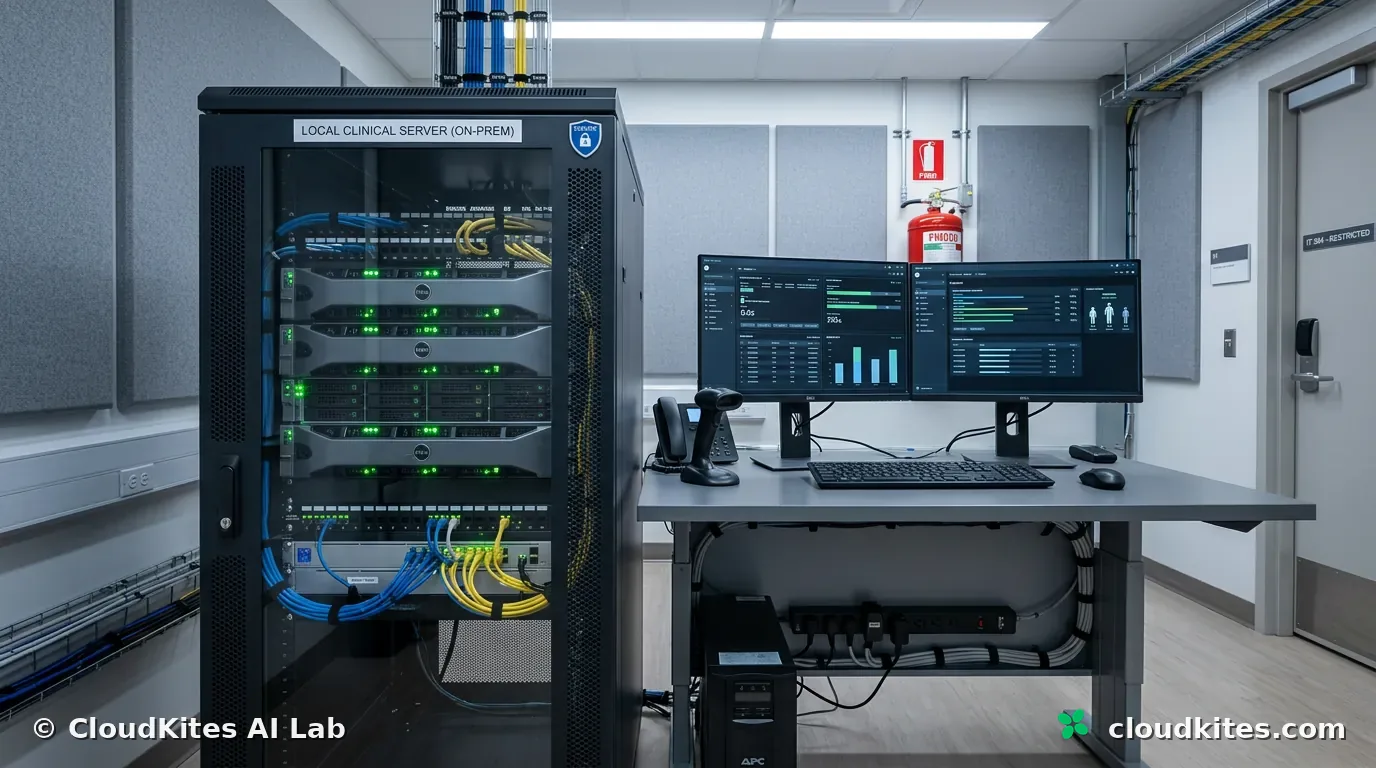
Servers and a clinical workstation inside a facility, with no link out to the cloud.
Your facility stays in your control
On-premise or hybrid — your choice; the free tools stay completely local.

The same answer, every time you ask.

Consistency is not a small feature; it is the foundation that makes everything else trustworthy. When a tool can give two different answers to the same question, you can never fully rely on either. Our outputs are built to be reproducible by default, so a result you saw today is the result you will see tomorrow — and the one a colleague will see when they double-check your work. Predictability is what turns a clever model into a clinical instrument.

  • The same input gives the same result.
  • Every step is logged and can be retraced.
  • Outputs are structured the same way, every read.
consistent, every read
Deterministic outputs: the same input yields the same structured result, every read.

Flexible data residency

On-premise or hybrid — your choice — with EU data residency available for the clinical platform.

Healthcare standards

Designed to align with DICOM, HL7 and HIPAA, and to clinical-software quality and risk-management practice.

Human in the loop

Assistive, never autonomous: clinicians and clinical staff review, approve or override every result.

Responsible disclosure

We welcome security reports and describe our status plainly, without overclaiming.

Assistive, never autonomous.

There is a line we do not cross: our tools assist, they do not decide. Every result a model produces is a suggestion placed in front of a person — a clinician or a member of the clinical staff — who reviews it, approves it, edits it, or sets it aside. Nothing acts on its own, and nothing is treated as a verdict simply because software produced it. A human is always in the loop, and that human holds the responsibility, exactly as they would without the tool.

Keeping a person in control is not a limitation we tolerate; it is a design choice we defend. It is what makes the outputs accountable, what keeps clinical judgement where it belongs, and what lets anyone trace, afterward, exactly who decided what and why. Combined with reproducible, auditable behaviour, it means an AI suggestion never quietly becomes an action no one chose. The tool proposes; the clinician disposes — and the record reflects that, every time.

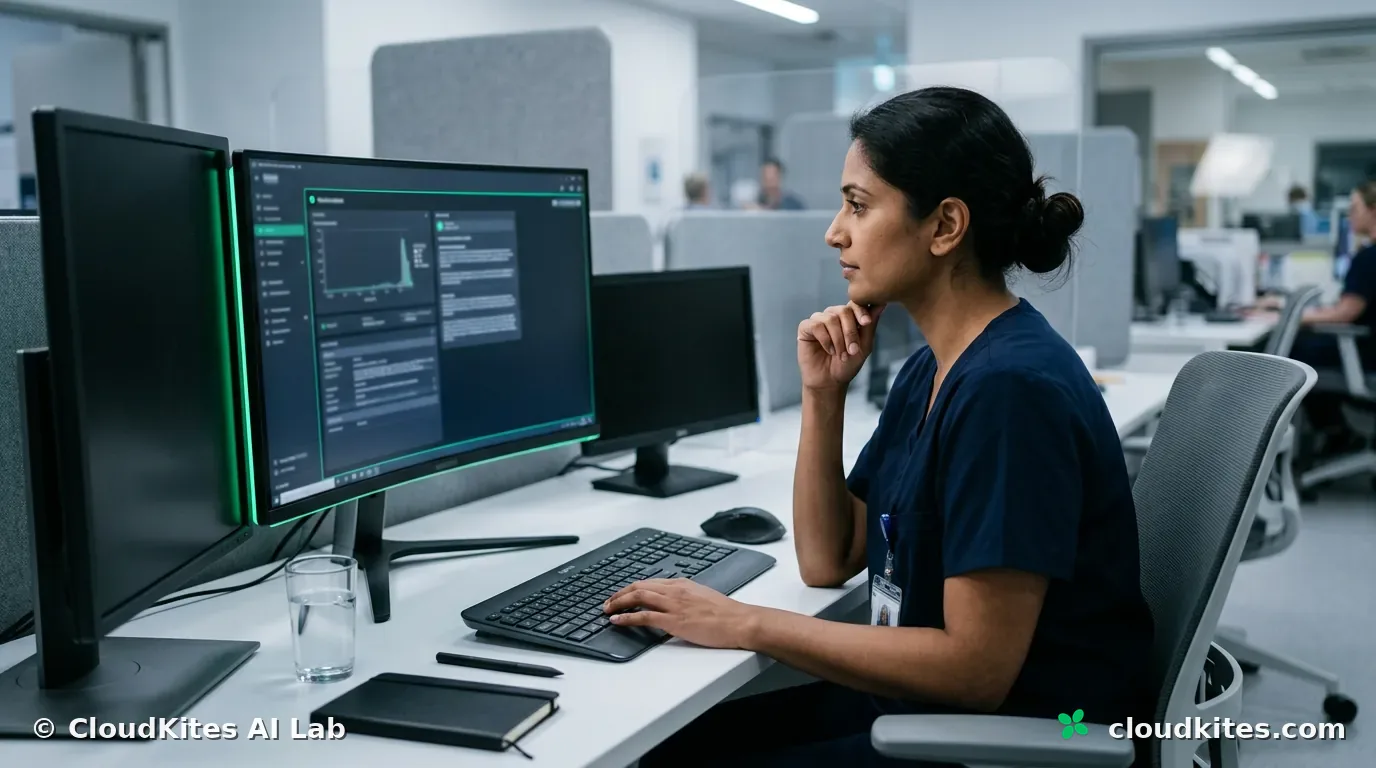
A clinician reviewing and approving an AI-assisted suggestion at a workstation.

DICOM imaging interoperability

HL7 clinical-data exchange

HIPAA-aligned health-information handling

Clinical-software quality & lifecycle

Risk management

Information security management

Data protection & privacy

Secure-by-design engineering

Trust is something we keep earning.

Security is never finished. Threats change, software changes, and the careful posture that is right today needs revisiting tomorrow. We treat trust as an ongoing practice rather than a box that gets ticked once: we design for it from the first line, we build to recognised standards for clinical-software quality and data protection, and we hold our own work to review rather than assuming it is correct. When we are still working toward a particular assurance, we say so plainly instead of implying more than is true.

We also believe security improves when more people are looking. If you find a weakness, we want to hear about it — responsible disclosure is welcomed, not treated as an embarrassment to be managed. And the relationship runs both ways: you stay in control of your data, you decide what is ever shared, and you can ask us, at any time, exactly how something works. The honest answer to a security question is worth more than a reassuring one, and that is the kind of answer we aim to give.

我的数据存放在哪里——本地还是云端?
由您选择。临床平台可完全本地部署或采用混合方式,并提供欧盟数据驻留。默认情况下,患者数据留在本地,仅在特定的、需选择启用的功能中同步去标识化或经同意的数据。免费工具 MedPodGP 与 Emu 完全本地运行——没有任何数据离开设备。
你们契合哪些医疗标准?
我们的产品旨在契合用于影像与临床数据互操作的 DICOM 和 HL7,以及用于健康信息处理的 HIPAA,并以公认的临床软件质量、风险管理与安全实践为基础。
AI 的输出是自主的吗?
不是。输出为辅助性,始终有人参与其中——临床医生和临床人员进行审阅、批准或推翻,且每款产品都明确说明预期用途。

Built for clinical trust.

Have a question about security, privacy or how your data is handled? We're glad to talk.