 CloudKites
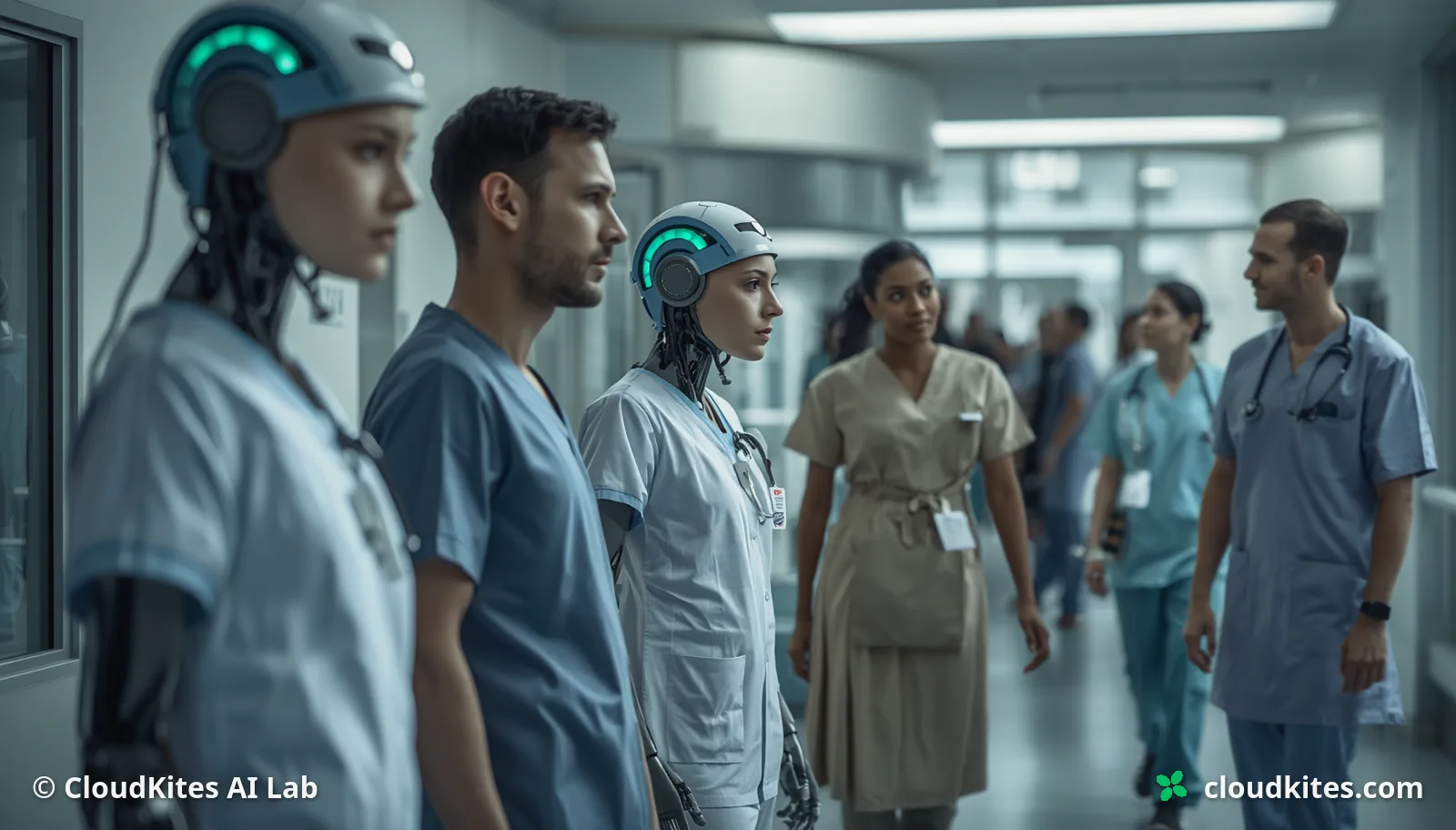
The pace of artificial intelligence advancement in healthcare is accelerating at a pace that few could have predicted a decade ago. What began as experimental algorithms for image recognition and administrative automation has rapidly evolved into a multifaceted ecosystem of intelligent systems that are reshaping clinical workflows, diagnostic accuracy, and patient engagement. We are witnessing a clear trajectory: from human-in-the-loop tools that augment documentation and diagnostics, to partially autonomous systems that orchestrate workflows, and ultimately toward humanoid robotic healthcare assistants capable of physical interaction and clinical support. This trajectory is not merely a technological upgrade; it represents a paradigm shift in how healthcare is delivered, governed, and experienced. Understanding this trajectory requires examining not only the technological milestones but also the ethical, regulatory, and humanistic dimensions that will determine whether this transition enhances or undermines the core values of medicine.
The Current Landscape: Human-in-the-Loop and Documentation Automation
The current phase of AI in healthcare is characterized by human-in-the-loop systems that augment rather than replace clinical judgment. The most widespread and impactful application is documentation automation. Ambient listening tools and natural language processing models now transcribe patient encounters in real time, generating structured clinical notes, coding diagnoses, and flagging documentation gaps. These systems have dramatically reduced administrative burden, a leading contributor to physician burnout, while improving documentation accuracy and billing compliance. Diagnostic AI has similarly advanced, with algorithms detecting anomalies in radiology, pathology, dermatology, and ophthalmology with accuracy that often rivals or exceeds human experts in controlled settings.
Despite these advances, the current paradigm remains firmly human-in-the-loop. Clinicians validate AI outputs, contextualize findings within patient history, and retain ultimate responsibility for clinical decisions. This model has proven effective in reducing administrative burden, improving diagnostic accuracy, and freeing clinicians to spend more time with patients. However, it also reveals inherent limitations: AI struggles with contextual nuance, rare presentations, and the interpersonal dynamics that define patient-clinician relationships. Moreover, the current model relies heavily on high-quality, standardized data, which remains uneven across healthcare systems. Despite these limitations, the current paradigm has proven effective in reducing administrative burden, improving diagnostic accuracy, and freeing clinicians to spend more time with patients.
The Rise of Agentic AI: From Assistance to Autonomous Orchestration
The next evolutionary step is agentic AI: systems capable of autonomous planning, execution, and adaptation without continuous human oversight. Unlike current AI that responds to prompts or analyzes static data, agentic AI can perceive, plan, execute, and iterate across complex workflows. In healthcare, this means AI that can monitor patient vitals, adjust treatment parameters within predefined boundaries, coordinate multidisciplinary care, and anticipate complications before they manifest. Unlike current AI that responds to prompts or analyzes static data, agentic AI operates in dynamic environments, adapting to real-time inputs and adjusting care pathways accordingly.
This shift promises unprecedented efficiency: continuous monitoring, predictive interventions, and personalized treatment optimization. Agentic AI can coordinate multidisciplinary care, manage medication regimens, schedule follow-ups, and anticipate complications before they manifest. In chronic disease management, mental health support, and post-operative recovery, agentic AI can provide continuous monitoring, personalized interventions, and real-time feedback. In mental health, AI-driven chatbots and virtual therapists are already providing accessible, scalable support for anxiety, depression, and stress management. In chronic disease management, AI-driven platforms are already providing personalized lifestyle recommendations, medication reminders, and real-time feedback.
Yet this shift also introduces profound challenges. Autonomous decision-making raises questions about accountability, error correction, and transparency. When an AI adjusts a medication dosage or recommends a surgical intervention, who bears responsibility? How do we ensure transparency, auditability, and patient consent? These questions underscore the need for robust regulatory frameworks, explainable AI, and clear boundaries between automation and human oversight. The challenge lies not in eliminating human oversight but in redefining the boundaries between automation and human oversight, ensuring that automation enhances rather than undermines clinical judgment.
The Next Wave: Humanoid Robotic Healthcare Assistants
The logical extension of this trajectory is the integration of humanoid robotics into healthcare settings. Unlike stationary AI or robotic arms, humanoid robots combine cognitive AI with physical embodiment, enabling them to navigate clinical environments, interact with patients, and perform physical tasks. Early applications include mobility assistance, medication delivery, vital monitoring, and rehabilitation support. In aging populations and understaffed facilities, humanoid robots could alleviate staffing shortages, perform routine tasks, and provide companionship. In post-operative recovery, stroke rehabilitation, and elderly care, humanoid robots could provide continuous monitoring, physical assistance, and companionship.
However, the transition from digital AI to embodied robotics introduces profound challenges. Physical safety, dexterity, and adaptability in unpredictable clinical environments require unprecedented engineering advances. More profoundly, the introduction of humanoid robots raises ethical questions about empathy, dignity, and the nature of care. Can a robot provide comfort, empathy, or moral presence? While robots can simulate empathy through voice, facial expression, and responsive behavior, they lack genuine consciousness, moral reasoning, and lived experience. The challenge lies not in replacing human caregivers but in augmenting their capacity, freeing them from routine tasks to focus on complex, empathetic, and relational aspects of care.
Implications, Challenges & The Path Forward
The transition to autonomous AI and humanoid robotics in healthcare demands careful navigation of technical, ethical, and societal challenges. Technically, achieving reliable, safe, and adaptable robotic systems requires breakthroughs in machine learning, sensor fusion, and real-time decision-making. Ethically, the deployment of autonomous systems demands rigorous validation, transparency, and accountability frameworks. Who is liable when an autonomous system makes an error? How do we ensure transparency, auditability, and patient consent? More fundamentally, the deployment of autonomous systems demands a redefinition of care itself. Medicine is not merely a technical process; it is a human endeavor rooted in empathy, trust, and moral responsibility.
Achieving this vision requires more than technological innovation; it requires ethical frameworks, regulatory oversight, and interdisciplinary collaboration. Regulatory frameworks must evolve to address liability, transparency, and safety standards for autonomous systems. Educational institutions must adapt to train healthcare professionals in AI literacy, critical evaluation, and ethical decision-making. Public trust requires transparency, accountability, and inclusive dialogue. Ultimately, the goal is not to replace human caregivers but to augment their capacity, freeing them from routine tasks to focus on complex, empathetic, and relational aspects of care.
Conclusion
The evolution of AI in healthcare is not a linear progression toward replacement but a complex evolution toward symbiosis. From documentation automation to agentic AI and humanoid robots, each phase builds on the last, expanding capabilities while raising new questions about safety, ethics, and human dignity. The future of healthcare lies not in replacement but in symbiosis: leveraging AI’s computational power, pattern recognition, and scalability while preserving the human elements of empathy, trust, and moral responsibility. The future of medicine lies not in automation but in augmentation: leveraging AI’s computational power while preserving the human elements that define healing. As we navigate this transition, the goal must be not to automate care but to augment humanity, ensuring that technology serves not to replace but to enhance the healing arts. The pace of change is unprecedented, but the goal remains unchanged: to heal, to heal, and to heal.